
Description
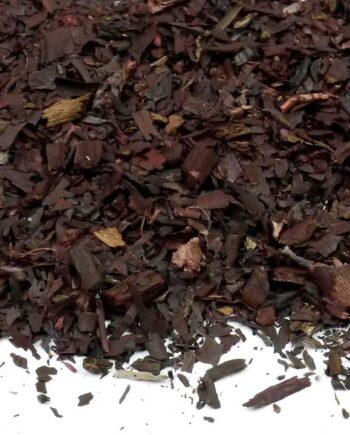
Madder (Rubia tinctorum) Meekrap ( NL )
Family: Rubiéceae
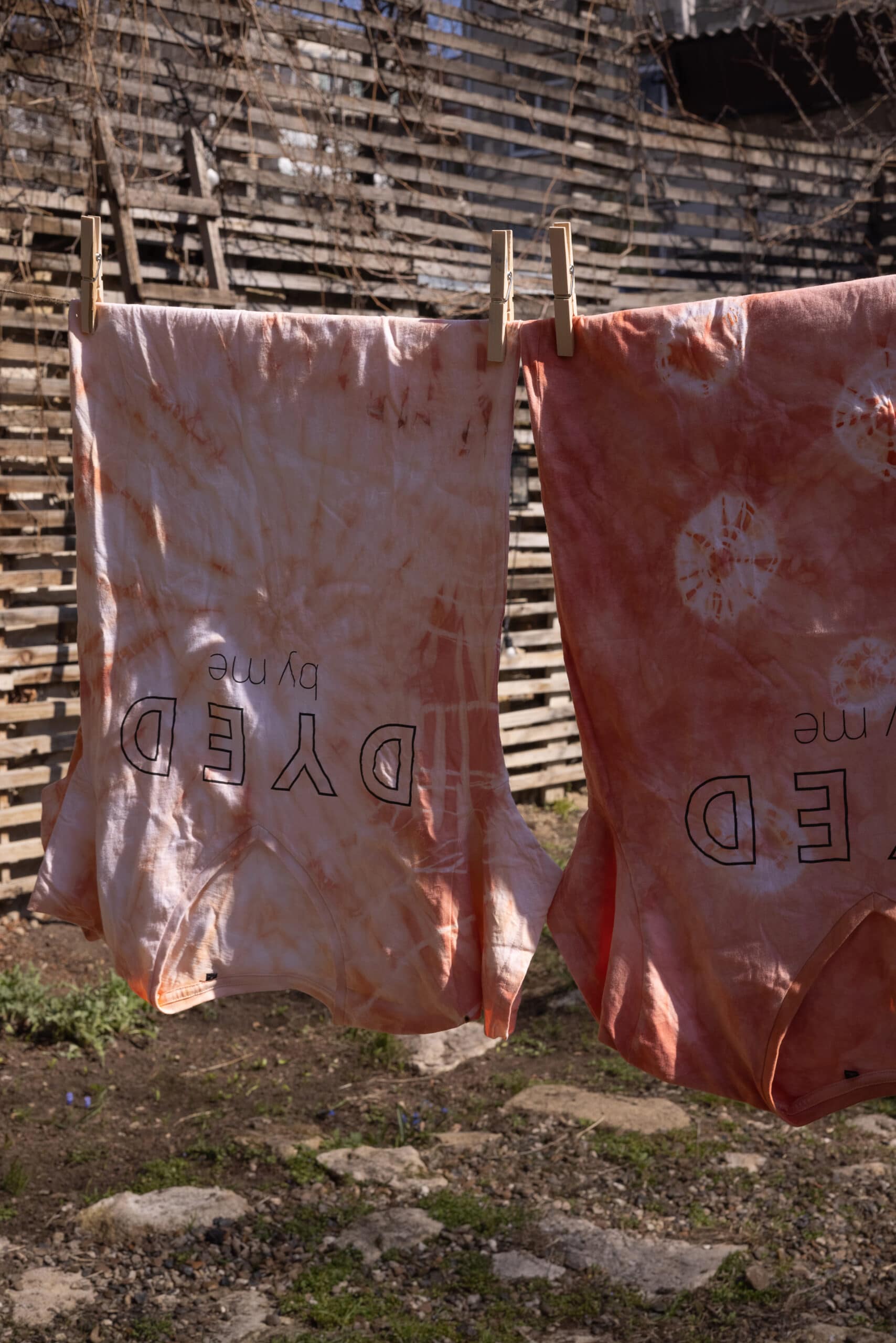
Dye: orange-red
For centuries madder has been the ‘king’ of grand tints and is also called mee or mead.
The roots of this plant were already used in ancient times by the Egyptians, Indians and Persians for dyeing wool and silk.
In 1700, the plant came to Europe, also to the Netherlands. The madder plant grew well on the moist clay soil of the islands of Zeeland and Zuid-Holland.
For some time Zeeland was even the largest supplier of madder and it brought great prosperity to the Netherlands.
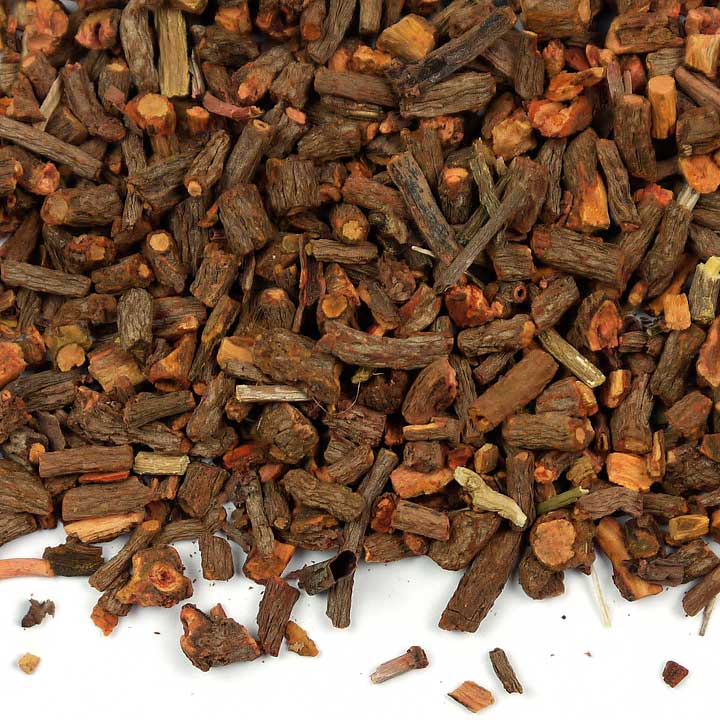
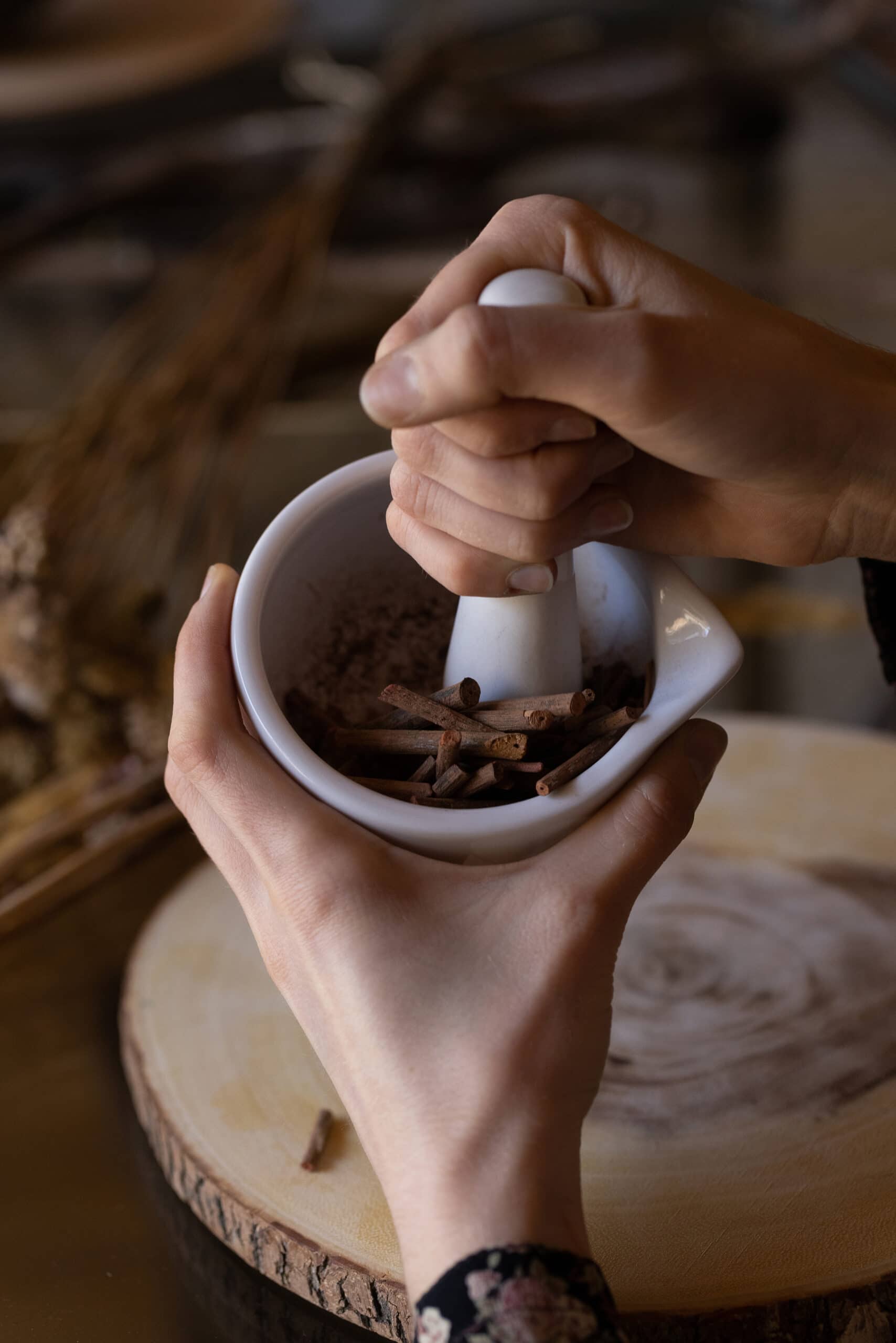
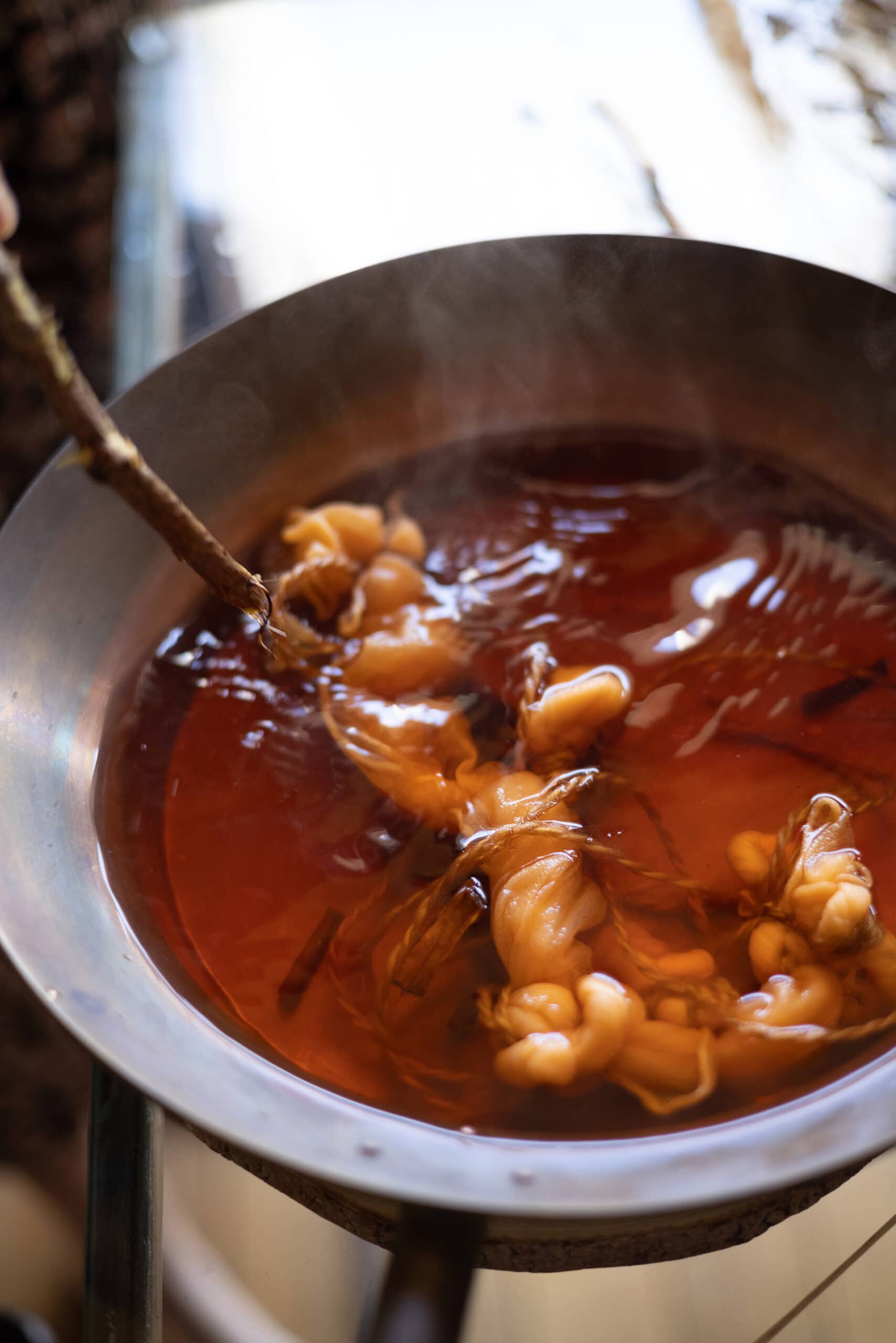
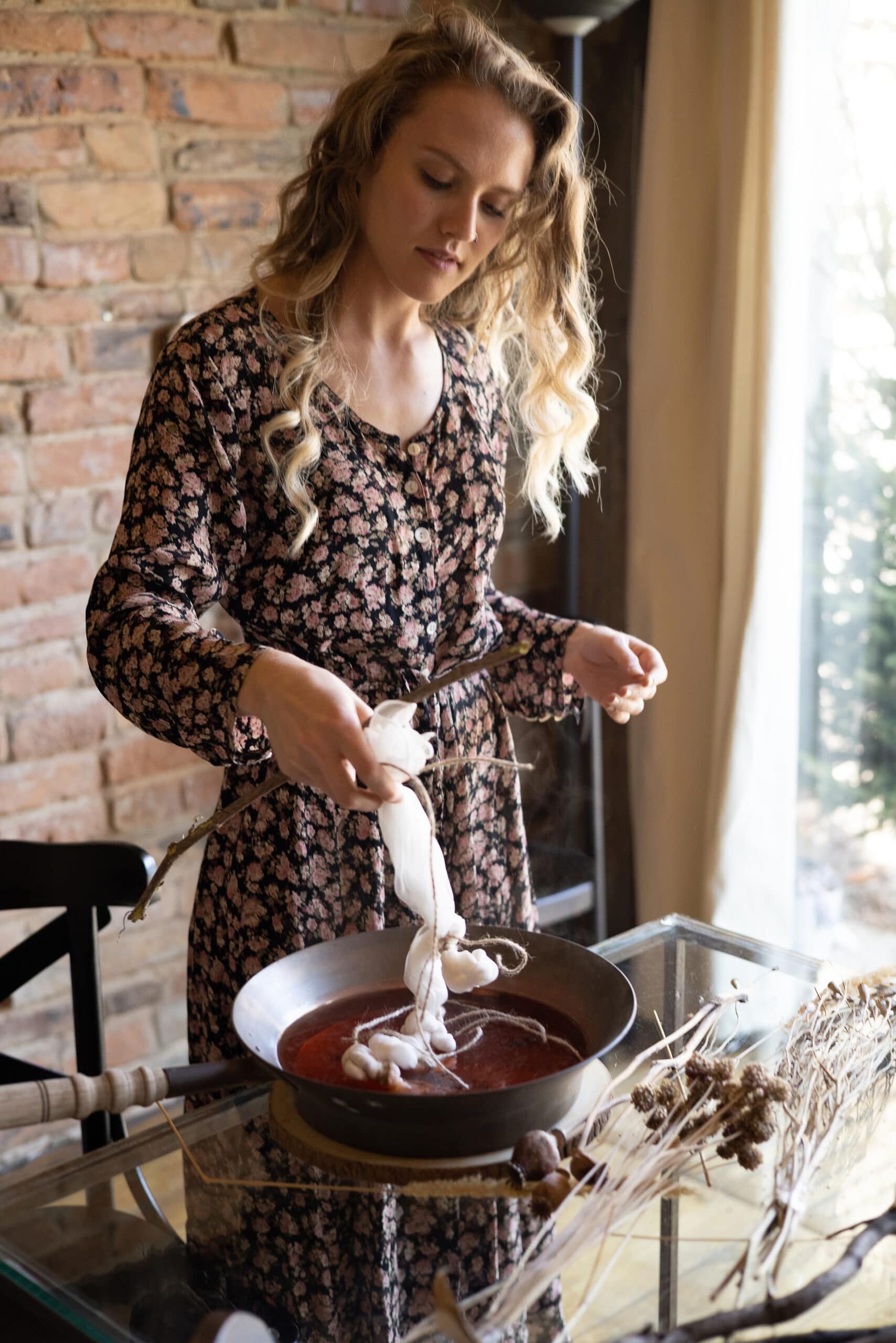
It is the red-brown roots that are used. These grow up to one metre deep in the ground. The dyes alizarin and purpurine are extracted from them, which give an intense deep orange-red colour. After three years, the roots contain enough colouring agents and can be harvested.
The name Rubia is derived from the Latin ‘ruber’, meaning red.
Facts
Madder…
… Was used by famous painters from the 17th century, like Rembrandt van Rijn, to make paint.
… roots were dried in the colder climates in small stone buildings with chambers, these were called masters ovens.
… is also a medicinal plant. It can be used against skin diseases and internally it drains moisture.
… was also cultivated on a small scale in Eierland (on Texel).
… was used to dye Persian carpets until the advent of synthetic dyes.
This is one of the natural dye products described in the book Eco-verf by Anja Schrik.
Anonymous –
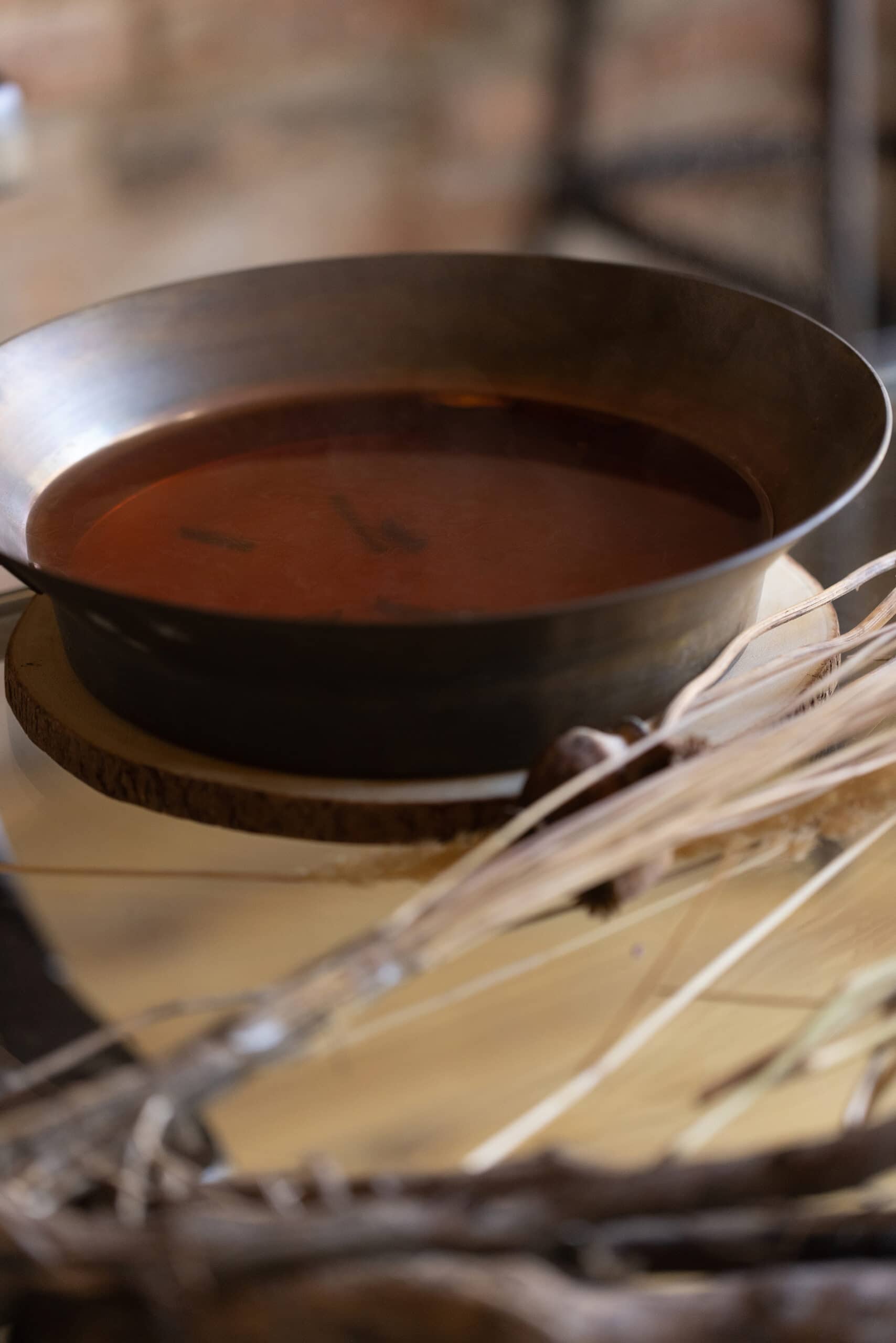
Meekrap is de tweede planten verfstof die ik probeer voor het kleuren van onbehandeld populierenhout. Het vraagt meer tijd om de kleur goed uit de verfstof te krijgen. Na 3 dagen weken, 2 keer verwarmen tot 65-70 graden en wat meer aluin had ik na ongeveer 1 week een bruikbare verfsoep. Na het zeven zakt de kleurstof naar de bodem, goed roeren bij het aanbrengen is nodig. Bezinksel aangewreven met Arabische gom geeft een mooie schilderbare verf die diep koraalrood tot watermeloen rose kleur geeft. http://www.mooieuitvaartkisten.nl